Are Your 'Natural' Home Scents Secretly Disrupting Your Peaceful Sanctuary?
A home can look peaceful, feel beautifully organized, and still contain small sources of everyday discomfort that are easy to overlook. One surprising possibility is the natural home scent impact of products we associate with relaxation: essential oil diffusers, soy candles, botanical room sprays, and scented cleaning products. Although these items are often marketed as gentle alternatives to conventional air fresheners, natural does not automatically mean harmless, non-irritating, or suitable for every indoor environment.
In modern apartments, where windows may remain closed, rooms serve multiple purposes, and ventilation varies considerably, fragrance deserves a little more attention. Creating a peaceful sanctuary is not simply about making a room smell pleasant. It is about understanding what enters the air, how much fragrance a space actually needs, and whether the atmosphere supports everyday comfort.
THE CENTRAL MESSAGE
A genuinely calming home does not need to smell like flowers, forests, or freshly baked cookies. Natural fragrance can be enjoyable, but a low-fragrance or fragrance-free environment may be a better choice when ventilation is limited or someone experiences sensitivity. Prioritize clean indoor air over a continuously scented room.
1. Why Natural Home Scents Deserve a Second Look
The word natural creates a reassuring impression. Lavender comes from a plant, citrus oils originate in fruit peels, and beeswax or soy wax may sound more familiar than synthetic fragrance ingredients. These associations can make scented products feel like an obvious choice for a healthier apartment.
However, the origin of an ingredient does not determine its effect after it enters indoor air. Natural substances are still chemicals, and some can contribute to irritation or unwanted reactions depending on their concentration, exposure, and individual sensitivity.
Essential oils illustrate this distinction particularly well. They contain concentrated aromatic compounds extracted from plants. Their recognizable botanical origins do not make them equivalent to harmless background air. When dispersed into a room, their volatile compounds become part of the indoor environment.
There are three important distinctions worth remembering:
- Natural origin versus safety: A plant-derived ingredient can still cause irritation or an allergic reaction.
- Pleasant smell versus healthy air: Enjoying a fragrance does not establish that the surrounding air is free from pollutants.
- Clean-looking ingredients versus complete transparency: Marketing descriptions may not communicate every ingredient, concentration, or potential exposure concern.
This does not mean every natural fragrance is inherently problematic. It means that choosing products based exclusively on words such as botanical, organic, clean, or plant-based can leave important questions unanswered.
2. Essential Oil Diffusers: Relaxing Atmosphere or Extra Indoor Exposure?
Essential oil diffusers are popular in bedrooms, living rooms, and workspaces because they offer an easy way to introduce botanical aromas without lighting a candle. Lavender, eucalyptus, peppermint, and citrus are especially recognizable choices.
Yet the way a diffuser releases fragrance matters. Ultrasonic models generally use water and vibration to disperse a fine mist containing water and essential oil. Nebulizing models disperse concentrated oil without relying on a water reservoir. Both approaches introduce aromatic substances into the surrounding environment.
The potential concern is not simply the fragrance itself. It is the combination of concentration, duration, room size, and ventilation.
When diffuser use may become uncomfortable
- Continuous operation: Running a diffuser throughout the day can create unnecessary ongoing exposure.
- Small rooms: A compact bedroom may accumulate noticeable fragrance more quickly than a larger, well-ventilated living area.
- Closed windows: Limited fresh-air exchange can allow indoor pollutants and fragrance compounds to remain in the space longer.
- Individual sensitivity: Some people experience headaches, eye irritation, coughing, or respiratory discomfort around particular fragrances.
Another frequently overlooked issue is the assumption that a diffuser automatically improves air quality. Its purpose is to disperse fragrance, not remove airborne contaminants. A pleasant aroma should never be confused with air purification.
A more thoughtful approach
If you enjoy essential oils and do not experience discomfort, consider using them occasionally rather than continuously. Follow the manufacturer's instructions, avoid excessive oil concentrations, and allow fresh air to circulate when practical.
If a fragrance produces discomfort, stop using it rather than trying to mask the reaction with another scent. For households with pets, check species-specific safety information before introducing essential oils. Some oils can pose particular risks to cats, birds, and other animals.
3. Soy Candles: Does Plant-Based Wax Guarantee a Cleaner Burn?
Soy candles have become familiar in modern home styling. Their neutral colors, minimalist containers, and associations with sustainable living make them popular decorative objects. They also appeal to people who want an alternative to traditional paraffin candles.
However, wax type is only one part of a candle's overall environmental impact.
Burning any candle involves combustion. Depending on the formulation, wick, fragrance, burning conditions, and ventilation, candle use can release particles and other combustion-related pollutants into indoor air.
Even a candle made primarily from soy wax may contain fragrance ingredients, dyes, and other additives. The presence of a plant-derived wax does not eliminate emissions associated with burning it.
What actually deserves attention?
Consider the entire candle rather than focusing on a single marketing claim.
- Wax composition: Understand whether the candle contains soy wax alone or a blend of different waxes.
- Fragrance formulation: Plant-derived fragrance is not automatically non-irritating.
- Wick condition: Follow trimming and maintenance instructions to help prevent excessive soot and an unstable flame.
- Burning duration: Longer burning sessions increase the time during which combustion products can enter the room.
- Ventilation: A small, closed bedroom is not an ideal place for frequent candle burning.
There is also a practical distinction between decorative and functional use. A candle displayed on a shelf can contribute to a cozy aesthetic without introducing combustion products. Lighting it is an entirely different decision.
If you love candlelight, consider using a candle warmer or an LED candle as an alternative. These options can create visual warmth without an open flame, although a warmer may still release fragrance if it heats a scented wax product.
4. Fragrance-Free Living: Why Less Can Feel More Peaceful
One of the most underestimated approaches to a comfortable apartment is removing unnecessary fragrance altogether.
Modern interiors often contain more scented products than residents realize. Laundry detergent, fabric softener, dish soap, floor cleaners, hand soap, room sprays, scented trash bags, and personal care products can all contribute to the overall fragrance level.
Individually, each product may seem insignificant. Together, they can create an environment in which multiple fragrance sources overlap throughout the day.
This is sometimes described as fragrance layering. A floral laundry scent mixes with a citrus cleaner, while an essential oil diffuser adds another aromatic profile. The result may be an apartment that smells consistently perfumed without any single product appearing particularly strong.
Reducing these overlapping sources can make a meaningful difference in how a room feels.
Fragrance-free does not mean unpleasant or sterile
A fragrance-free home can still feel warm, inviting, and beautifully styled. Comfort can come from natural light, clean textiles, fresh ventilation, warm lighting, wood finishes, and uncluttered surfaces.
It is also important to distinguish fragrance-free from unscented. Fragrance-free products are generally formulated without added fragrance ingredients. Unscented products may contain ingredients intended to minimize or mask the smell of the formulation itself.
When fragrance sensitivity is a concern, look for clearly labeled fragrance-free products and review ingredient information rather than relying on a product's overall marketing language.
5. Air Purifiers and Fresh Air: What Actually Helps?
Air purifiers can support an indoor air-quality strategy, but their capabilities are frequently misunderstood.
A properly sized mechanical air purifier with a HEPA filter can reduce airborne particles, including dust, pollen, and certain other particles suspended in indoor air. However, a HEPA filter alone is not designed to remove every gaseous chemical or fragrance compound.
For certain gases and volatile organic compounds, activated carbon or another suitable gas-phase filtration medium may be useful. Performance depends on the amount and quality of the filtration material, airflow, maintenance, and the specific contaminant.
This distinction matters when deciding whether an air purifier can compensate for frequent fragrance use.
Match the solution to the problem
- If the main concern is airborne dust or pollen, a properly sized HEPA-filtered purifier may help.
- If the concern involves certain gases or odors, a purifier with substantial activated carbon may offer additional filtration.
- If the concern is an ongoing fragrance source, removing that source is usually more direct than trying to filter around it.
- If the room feels stuffy because outdoor conditions permit too little ventilation, appropriate fresh-air exchange may be more useful than fragrance or filtration alone.
Air purifiers are not substitutes for source control. They also cannot correct every indoor air-quality problem, including excess humidity, hidden mold, or pollutants generated by an appliance.
For apartment residents, the most balanced strategy is often a combination of reducing unnecessary emissions, maintaining appropriate ventilation, and using filtration when a specific need exists.
6. Understanding the Differences Between Common Home Scent Choices
Instead of treating all natural home scents as interchangeable, it helps to examine how each option changes the indoor environment. The following comparison focuses on how products work, their limitations, and when a different approach may make more sense.
The important takeaway is that these options solve different problems. A diffuser adds fragrance. A candle provides light while burning fuel. An air purifier removes certain pollutants. A fragrance-free routine reduces one potential source of indoor exposure.
Choosing between them should begin with the actual problem you want to solve, not the aesthetic or wellness language attached to the product.
7. Small Apartment Habits That Can Improve Indoor Comfort
Apartment living presents a particular challenge because cooking, sleeping, working, exercising, and relaxing may all happen within a relatively small area. A fragrance that feels subtle in a spacious home can become overwhelming in a compact studio.
Fortunately, improving the indoor environment does not require a complete redesign or an expensive collection of home products.
Start with the source of unwanted odors
If the kitchen smells unpleasant, identify whether the cause is food residue, a full trash container, an unclean drain, or inadequate ventilation. Adding a fragrance spray may temporarily change the smell without addressing the source.
Likewise, a musty bedroom should prompt an inspection for damp fabrics, condensation, leaks, or excessive humidity. Covering a persistent musty odor with lavender is not a meaningful solution.
Give fresh air a practical role
When outdoor air quality, weather, and security conditions permit, opening windows can help exchange indoor air with outdoor air. Use kitchen and bathroom exhaust fans where available, especially when cooking or showering.
Ventilation is not universally beneficial in every situation. During periods of high outdoor pollution, wildfire smoke, extreme humidity, or heavy pollen, keeping windows closed and relying on suitable filtration may be more appropriate.
Make cleaning less dependent on fragrance
Cleaning products do not need to leave behind a strong scent to perform their intended function. Choose products based on their cleaning purpose and follow their directions.
Never mix cleaning chemicals to create a homemade fresh scent. In particular, mixing bleach with ammonia or acidic cleaners can produce dangerous gases. Simple cleaning routines are generally more useful than complicated combinations of scented household products.
8. A Practical Reset Checklist for a More Peaceful Home
If your apartment has gradually accumulated scented products, there is no need to throw everything away at once. A gradual reset makes it easier to identify which changes improve your environment and which habits are unnecessary.
THE LOW-FRAGRANCE HOME CHECK
Use this checklist when reviewing your bedroom, kitchen, bathroom, and shared living areas.
- ☐ Identify all fragrance sources, including diffusers, candles, sprays, laundry products, and cleaners.
- ☐ Stop using products that consistently cause headaches, coughing, irritation, or discomfort.
- ☐ Check whether any persistent odor has an underlying source, such as dampness, food residue, or poor drainage.
- ☐ Consider switching frequently used laundry and cleaning products to fragrance-free alternatives.
- ☐ Review bedroom ventilation and avoid running fragrance devices continuously.
- ☐ Clean reusable diffuser components according to manufacturer instructions.
- ☐ Maintain air purifier filters according to their recommended replacement schedule.
- ☐ Use kitchen and bathroom exhaust fans when appropriate.
- ☐ Check for dampness, condensation, and possible moisture problems.
- ☐ Keep potentially hazardous fragrance products and essential oils away from children and pets.
The goal is not to create a perfectly scentless apartment overnight. It is to reduce unnecessary exposure and build habits that support a comfortable indoor environment.
A simple three-stage reset
Stage one: Observe. Spend a few days noticing which rooms contain the strongest fragrances and which products are used most frequently. Pay attention to situations associated with discomfort without assuming that fragrance is necessarily the only cause.
Stage two: Simplify. Remove unnecessary room sprays, reduce diffuser use, and consider fragrance-free alternatives for everyday cleaning and laundry. Avoid changing every product simultaneously if you want to understand which adjustments make a difference.
Stage three: Maintain. Establish a routine for ventilation, cleaning, moisture control, and filter maintenance. Keep only the fragrance products that genuinely add enjoyment without creating an uncomfortable environment.
9. Important Cautions: Natural Fragrance Is Not Risk-Free
IMPORTANT SAFETY NOTE
Do not assume that essential oils, botanical extracts, or naturally scented products are safe for everyone. Concentrated oils can cause skin or eye irritation, and certain fragrances can trigger symptoms in sensitive individuals. Keep oils away from children and pets, follow product-specific safety instructions, and never ingest essential oils unless specifically directed by a qualified healthcare professional.
If a fragrance causes breathing difficulty, wheezing, significant irritation, or another concerning reaction, stop exposure and seek appropriate medical advice. Severe breathing difficulty requires urgent medical attention.
Who may benefit most from reducing fragrance?
People who experience fragrance-related discomfort may find a low-fragrance environment particularly useful. This includes individuals who notice symptoms around scented products or who prefer to minimize unnecessary airborne irritants.
Households with infants, people with respiratory sensitivities, and homes containing animals may also benefit from being especially cautious about concentrated fragrance products. Specific precautions depend on the person, animal species, product, and exposure circumstances.
When fragrance reduction is not the complete answer
There is an important limitation to the low-fragrance approach: eliminating scented products does not guarantee healthy indoor air.
Cooking emissions, tobacco smoke, outdoor pollution, cleaning chemicals, building materials, excessive moisture, and other indoor sources can remain even in a fragrance-free home.
Similarly, not every unpleasant indoor smell comes from fragrance products. Persistent mustiness, chemical odors, or unexplained changes in air quality deserve investigation rather than simply purchasing a different air freshener.
The most useful principle is source control. Identify what is affecting the room, remove or reduce the source where possible, and use ventilation or suitable filtration as additional measures.
10. Frequently Asked Questions About Natural Home Scents
1. Are essential oil diffusers safer than conventional air fresheners?
Not necessarily. Essential oil diffusers and conventional air fresheners introduce different fragrance formulations into indoor air, and neither category is automatically harmless. Essential oils contain concentrated aromatic compounds that can irritate sensitive individuals. The more useful comparison considers ingredients, exposure, room ventilation, and individual tolerance rather than assuming that natural products are always safer.
2. Are soy candles completely non-toxic?
No candle should automatically be described as completely non-toxic simply because it contains soy wax. Burning candles involves combustion and may release particles and other substances into the surrounding air. Fragrance additives and burning conditions also matter. Choosing an unscented LED candle eliminates combustion from the candle itself and can provide a practical alternative for people who prefer to avoid indoor candle emissions.
3. Can essential oil diffusers cause headaches?
Some people report headaches or other discomfort around strong fragrances, including essential oils. Individual responses vary, and headaches can have many possible causes. If you notice a consistent association with a particular diffuser or fragrance, discontinue its use and observe whether the discomfort improves. Seek medical advice for recurring, severe, or unexplained symptoms.
4. Does an air purifier remove essential oil fragrance from a room?
It depends on the filtration system. A HEPA filter captures airborne particles but does not independently remove every gaseous fragrance compound. An air purifier containing suitable activated carbon may reduce certain gases and odors, depending on its capacity and maintenance. Removing the fragrance source and providing appropriate ventilation are often more direct ways to reduce unwanted scent exposure.
5. Is fragrance-free better than naturally scented?
For someone who experiences fragrance sensitivity or simply prefers a neutral indoor environment, fragrance-free products can be a practical choice. However, fragrance-free does not automatically mean that a product is free of every potentially irritating ingredient. Read the ingredient information and select products appropriate for their intended use.
6. How often should I use an essential oil diffuser?
There is no universal schedule that guarantees safety for every person, room, and essential oil. Follow the manufacturer's operating instructions, avoid continuous unnecessary exposure, and consider the room's size and ventilation. If you have sensitive household members or pets, additional precautions may be appropriate. Stop using the device if it causes discomfort.
7. Can I create a fresh-smelling apartment without using fragrance?
Absolutely. Regular cleaning, proper food storage, clean laundry, dry bathroom surfaces, appropriate ventilation, and prompt removal of waste can all help maintain a pleasant home. Addressing moisture and drainage issues is particularly important when persistent odors appear. A clean room does not need a strong perfume-like scent to feel welcoming.
8. Should I keep my windows open all day for better indoor air quality?
Not necessarily. Ventilation can improve indoor air exchange, but outdoor conditions matter. During wildfire smoke events, high pollution periods, extreme humidity, or heavy pollen seasons, opening windows may introduce additional unwanted pollutants. Consider outdoor air conditions, use appropriate exhaust systems, and select filtration based on the specific indoor air-quality concern.
11. Rethinking What a Truly Peaceful Sanctuary Smells Like
The natural home scent impact conversation is ultimately about reconsidering what makes a home feel healthy and comfortable. A beautifully styled apartment does not need a constant layer of lavender, citrus, vanilla, or eucalyptus to communicate relaxation.
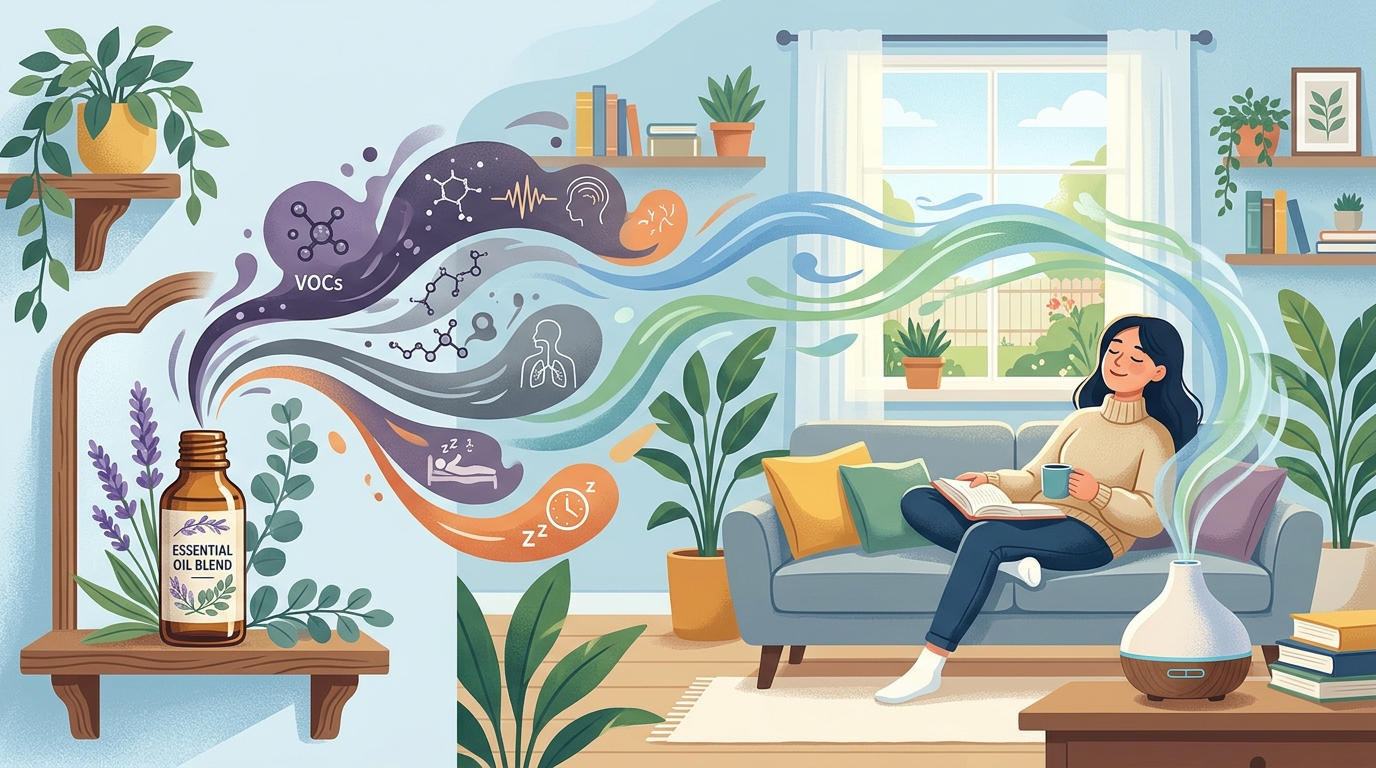
Natural fragrances can still have a place in everyday life. Someone who enjoys an occasional candle in a ventilated room and experiences no discomfort may reasonably decide that the atmosphere is worth maintaining. Another person may find that even a mild fragrance is distracting or unpleasant. Neither experience should be treated as universal.
The important distinction is between personal enjoyment and an assumption of safety. Botanical ingredients, soy-based wax, and plant-derived aromas are not automatic guarantees of cleaner air. Their actual effects depend on the formulation, how they are used, the surrounding environment, and individual sensitivity.
For a modern apartment, a sensible approach is to reduce unnecessary fragrance sources first. Keep rooms clean, manage moisture, ventilate when outdoor conditions allow, and consider appropriate filtration when there is a specific air-quality need. If you enjoy scented products, use them thoughtfully rather than treating continuous fragrance as a requirement for comfort.
There is also a quieter design lesson here. Soft lighting, comfortable fabrics, natural textures, uncluttered surfaces, and a consistent cleaning routine can create a welcoming atmosphere without introducing additional airborne fragrance. Sometimes the most luxurious feeling in a small apartment is simply walking into a room that feels fresh, calm, and unobtrusive.
A peaceful sanctuary should support the people who live in it, not ask them to tolerate an endless collection of pleasant-smelling products. The best home fragrance routine may be an occasional scent you genuinely enjoy. It may also be no added fragrance at all.
Ultimately, a comfortable home is not measured by how strongly it smells. It is measured by how well it supports everyday living. Let fresh air, thoughtful choices, and a balanced indoor environment become the foundation of your personal sanctuary.


Comments
Post a Comment